Monday, March 7, 2016

A Photo Session -- HVL Tournament / St. Peter's basketball

Philip's last basketball game for grade school was on Sunday at the HVL Tournament.  They had hoped to bring home the 3rd place trophy, but too many missed shots resulted in taking 4th place in the final game.  Philip ended up getting a medal for All-Tournament team.  We are proud of his accomplishments and look forward to what his years at Michigan Lutheran Seminary might mean.

Here are some photos from the weekend.

A close win over St. Stephen's, Andrian

A loss against St. Paul's, Livonia.

A win against Crown of Life, Warren.


A loss against Trinity, Jenera, OH.

Sunday, March 6, 2016

Sermon -- 4th Sunday in Lent (March 6, 2016)

LUKE 15:1-3,11-32

THE LORD IS GRACIOUS
TO THE SINNER.

In the name + of Jesus.

     I don't know if it is unique to America; it's probably a human nature thing: We like to see justice done.  Even our entertainment taps into that desire.  We want the cop shows to end with the bad guy being arrested, convicted, or even killed.  We like to see James Bond foil the evil plot.  On a smaller scale, we watch YouTube videos to see people do stupid stunts.  We don't feel bad for them because they get hurt.  Rather, we point and laugh because their stupidity got them what they deserved.  Even Oscar winners can't help but rant about some injustice they deem important.  People have varying ideas about what justice looks like, but everyone demands it and delights in it.
     For that reason, we might have some sympathy for the older brother in the parable that Jesus told.  The younger brother had asked for his share of the inheritance.  He took the money and went off to spend it all on booze and prostitutes.  The older brother, however, was the good son.  He did not dishonor his father by asking him to cash out his last will and testament before he was dead.  He did not sully the family name with a lifestyle of drunken nights and fornicating.  He stayed at home.  He did his chores.  Far from squandering the family fortune, he did all he could to add to his father's estate with hard, diligent work.  Now, you be the judge: Which one was the good son?  Which one should the father love and honor?  It's a pretty easy answer, isn't it?
     Now you can appreciate why the Pharisees were disgusted by Jesus.  The tax collectors and sinners were all drawing near to hear him.  And the Pharisees and the scribes grumbled, saying, “This man receives sinners and eats with them.” (Luke 15:1-2)  What kind of rabbi honors people who so flagrantly sin against God?  What kind of prophet rubs shoulders with people who sully the Lord's name with their wicked ways?  Jesus did not merely give them a polite wave or a brief acknowledgment; Jesus received sinners and ate with them.  In other words, he bonded with them, declared unity with them, and accepted them.
     The older brother was the good son.  He never left home.  He always showed up for duty.  And he expected to be rewarded for it.  After yet another day of laboring out in the fields, he came home to the sound of music and dancing, to the smell of beef roasting, and to the noise of the revelers laughing.  But the party was not for the good son; it was for the scoundrel who came home destitute and dirty and desperate.  Honor and reward were being bestowed upon the derelict.  Where is the justice in this?
     When we hear Jesus' parables, we often try to associate ourselves with the hero of the story.  But which are you really closer to?  Is it not the older brother?  He is the one who claimed: “Look, these many years I have served you, and I never disobeyed your command...” (Luke 15:29)  Those were not empty words.  For all those years, he was the good son who tried to be obedient.  Doesn't that describe us?  We are the ones in church again.  We daily strive to do what God's Commandments call us to do.  But like the older brother, we believe that justice demands that we be rewarded for our good behavior and our church attendance.  We think that we have earned something from God because we have not given ourselves over to a life of boozing and whoring.  The Pharisees truly believed that they did deserve better from God, just like the older son who was outraged that the flagrant sinner was celebrated while he was weary from another day of toiling in his father's service.  That, we would argue, is not justice.
     But the Lord does not work according to justice; the Lord is gracious to the sinner.  That really begins to bother us when we see God's grace put into practice.  We want to see justice done.  We want to see sinners pay the price.  But God desires to be gracious.  He delights in saving sinners, no matter how sinful they have been.  That is why Jesus welcomed tax collectors and prostitutes, telling them that there was mercy even for them!  If we say that we like the idea of the tax collectors and the prostitutes being welcomed by Jesus, what we mean is that we prefer to know about it in a magazine article, not in our own church.  We rejoice that a prostitute in Vegas repents and goes to church.  Would we have such joy if that woman came off the street from last night's work and sat down in Good Shepherd this morning?  That is how we are like the older brother who refused to step foot in his father's house when the prodigal son was welcomed back with open arms and without strings attached.
     We fail to recognize what justice looks like.  If we demand God to give us what we deserve, he will.  And for our sins, we deserve death and everlasting punishment.  Maybe you don't think your sins are as egregious as the crook or as flagrant as the prostitute, but God sees the deeds we do behind closed doors, hears the words we say behind people's backs, and knows even the secret thoughts of our hearts.  The divine justice we deserve for those is eternal fire.
     But God has revealed a different justice to us.  The Lord is gracious to the sinner.  In our parable, if we are going to compare Jesus to anyone, it may well be the prodigal son.  For, Jesus left his Father's house and went to squander all of God's gifts and his goodness on people, even on the likes of the prostitutes and sinners who came to him.  That is exactly what disgusted the Pharisees: The Pharisees and the scribes grumbled, saying, “This man receives sinners and eats with them.” (Luke 15:2)  Jesus spent his time and his mercy on all kinds of sinners, including those who will never care or repent or believe.  We find this lavishness foolhardy.  Why be more merciful than you need to be?  But Jesus never considered such lavish mercy a waste.  He is the Lamb of God who takes away the sins of the world—even our sins of being so stingy with our compassion and failing—even refusing—to love the unlovable.
     Our mercy has strict limits, but Jesus poured out boundless mercy and grace upon us.  His mercy caused him to take our sins upon himself and to suffer for us what justice truly demands.  He was condemned and cursed for us.  And his grace caused him to give to us a place in the Father's house that we could never earn or deserve.  Jesus has cleansed us of our filth, wrapped us in a robe of righteousness, and put the ring on our finger which gives us all the privileges of being in the Father's house.  We rejoice in seeing justice done.  The Lord finds great joy that Jesus was prodigal (i.e., wasteful) with his grace; for it means the salvation of sinners.  And after Jesus had completed his mission, the Father received Jesus back with festal joy and fanfare.  Jesus lives and reigns on high, assuring us that we, on whom he spent his grace, will live and feast with him.
     The Lord is gracious to the sinner.  If you are the older brother who dwells in the Father's house, you have not been cheated out of anything.  As the father said in the parable, “Son, you are always with me, and all that is mine is yours.” (Luke 15:31)  Jesus' lavish grace has been spent on you, and it continues to be spent.  For though you strive to be obedient children to your heavenly Father, you and I still fall short.  But God does not grow tired of being gracious to sinners.  He is not stingy with his compassion and forgiveness.  All that is his is yours.  You have his blessing, his peace, his favor, and his salvation.  As his children, you are heirs of eternal life.  These have always been yours.  And so, you have a comfort that all people crave even though they wallow like pigs.
     The Lord is gracious to the sinner, no matter how wicked that sinner has been.  And if the Lord's grace means that flagrant sinners are brought into the family, you have lost nothing.  But you have gained a brother.  Therefore, it is fitting to celebrate at the salvation of every sinner.  We welcome them to the feast, and we look forward to the eternal wedding banquet of the Lamb, where his mercy, his grace, and his goodness endure forever.

In the name of the Father and of the Son + and of the Holy Spirit.  Amen. 

Friday, March 4, 2016

A Photo Session -- Basketball season coming to an end

As the basketball season comes to a close, we run into a whole succession of "lasts" in the Schroeder household.  Andrew has played his last game in the MLS gymnasium, which was also his last regular season game.  He will be playing in District playoffs this coming Wednesday, but Lenten services guarantee that we will not be able to see it.

Caleb also played his last JV game for the Cardinals.  We are hopeful that he will be playing for varsity next year.

Philip is concluding his grade school basketball career this weekend at the HVL tournament.  Photos from that will come when the tournament is over.

Once again, Laura and I face that bittersweet time when we will bid farewell to another child's high school career.  Andrew (we pray) has many good things ahead of him, but we lament that we will not be able to enjoy more high school sports with him.  It has been fun watching him all these years, and it will be odd not to see him suiting up for MLS any longer.  I know he is getting older, but I sure feel like I am getting older even faster with each "last" that we log into our lives.

By the way, Andrew's last shot was a lay-up, which was probably only an inch away from being a dunk.  I was hoping to get a photo of Andrew's last shot, but as it turns out, I got so absorbed in watching the game that I missed it.  Andrew did not.

Photos from the last few games:
MLS vs. St. Louis.  The 2nd half was played in a darkened gym after the wind blew out a transformer.
Parents' night.
One of two dunks from the game vs. Merrill.
We did not get to see many of Caleb's games, as our schedules prohibited many of them.
This one is vs. Breckenridge.


I think many teams will be happy that they don't have to look at this next year when they shoot.
I don't know how many blocks Andrew ended up with, but it had to be a lot!

Wednesday, March 2, 2016

Sermon -- Lenten Vespers (March 2, 2016)


JOHN 14:1-6

IN THE UPPER ROOM WITH JESUS
“How Can We Know The Way?”

In the name + of Jesus.

     When Jesus asked his disciples who they thought he was, Peter confessed correctly, “You are the Christ, the Son of the living God.” (Mathew 16:16)  Immediately after that, Jesus began to teach his disciples what it meant that he was the Christ.  He began to show his disciples that he must go to Jerusalem and suffer many things from the elders and chief priests and scribes, and be killed, and on the third day be raised. (Matthew 16:21)  The Gospels record at least three times when Jesus pointedly and specifically told his disciples what was in store for him.  He would go to Jerusalem.  He would go to the cross and then to the grave.  Finally, he would rise from the dead.
     At last, Jesus and his disciples had arrived at Jerusalem.  His hour was finally at hand.  In the upper room, Jesus' announced once again that he was going away.  This time, when Jesus told his disciples that he was about to go, the destination was neither Jerusalem nor the cross.  He was going to his Father's house.  Jesus told them, “You know the way to where I am going.”  Thomas said to him, “Lord, we do not know where you are going.  How can we know the way?” (John 14:4-5)
     In one respect, Thomas was correct.  We can't find our way to the Father's house, no matter how much we would like to try.  When we speak of the Father's house, we usually use a term like eternal peace.  The Father's house is Paradise in which all things are pure and perfect and permanent.  Philosophers have dreamed of a place like it.  Politicians might promise you such a place.  But every effort that men have put forth to establish heaven on earth or even peace in our time have been spectacular failures.
     Jesus urged his disciples, “Let not your hearts be troubled.” (John 14:1)  But our hearts are easily unsettled.  We have labored to make our own peace on earth.  And our efforts also result in spectacular failures.  We do everything we can to keep the peace in our homes, to get along at work, and to play nice in our neighborhoods and towns.  But we still prove ourselves to be sinners.  So guilt destroys our peace.  We try to control our environment to maintain peace, but circumstances are beyond our control.  They are constantly changing and constantly reminding us that we are helpless.  So worries disrupt our peace.  We live in a world that is broken and perishing.  Any news report will remind you of that.  Fear unravels our peace.  So when Jesus says, “Let not your hearts be troubled” (John 14:1), he almost seems to be mocking us.  But our hearts are troubled because we put our trust in the wrong things.  We trust in ourselves, our powers, and our world.  This is idolatry, and there is no peace for anyone who is an idolater.  Repent!
     Jesus told his disciples, “In my Father's house are many rooms.  ...I go and prepare a place for you.  You know the way to where I am going.”  Thomas said to him, “Lord, ...how can we know the way?” (John 14:2-5)  Thomas was still unsettled that Jesus was going.  Who could blame Thomas for his concern?  Jesus is the one who healed sickness and diseases.  Jesus calmed the storm and fed the thousands.  Jesus drove out demons and protected his disciples from the evil one.  When Thomas heard Jesus say he was going to his Father's house, he felt like Jesus was abandoning them.  The fact is, we remain here in a world where we endure sickness and diseases.  Even if we are fed, we still worry if we will have enough money to pay bills or to retire.  The Evil One still tempts us to do evil and taunts us over the evils we have done.
     Jesus assures you that his departure is a good thing.  He says, “Let not your hearts be troubled.  In my Father's house are many rooms.  ...I go and prepare a place for you.  You know the way to where I am going.”  Thomas said to him, “Lord, ...how can we know the way?” (John 14:1-5)  To Thomas and to us and to all whose hearts are troubled and shaken, Jesus declares, “I am the way, and the truth, and the life.  No one comes to the Father except through me.” (John 14:6)  Jesus is the one who brings us to the Father.
     Jesus tells you not to let your hearts be troubled, but it was Jesus who earlier was troubled.  Just a few days before he was in the upper room, Jesus said, “Now my soul is troubled.  And what shall I say?  Father, save from this hour?  But for this purpose I have come to this hour.” (John 12:27)  Jesus was filled with sorrow, knowing the pain, torment, and agony he would have to endure.  Jesus does not merely have sympathy for us in our difficulties.  He takes up all our guilt and sorrows in order to deliver us from them all.  And he takes upon himself all of our troubles and pains, our punishment and our curse.  For this purpose, Jesus came to the hour of his torturous death.  “There is no peace,” says the LORD, “for the wicked,”(Isaiah 48:22), and so Jesus delivers us from all wickedness by his death.  At the cross, Jesus finds a merciless God who pours out hellish pain and relentless wrath.  This is the cost for sin.  This is the price that was paid.
     But Jesus paid the price in full.  And that is why he can say to you, “Let not your hearts be troubled.” (John 14:1)  Jesus takes away all that truly troubles you.  Guilt cannot destroy your peace; for your sins are forgiven.  Circumstances may change and maybe not for the better, but God's promises do not change.  You are a redeemed child of God—whether it is a good day or a bad day.  And even though the world is broken and perishing, you are set apart from this world and set apart for a place in the Father's house.  You know the way to the place where Jesus has gone.  Jesus said, “I am the way, and the truth, and the life.  No one comes to the Father except through me.” (John 14:6)
     Jesus is the way to the Father's house.  He has prepared all things for you.  He has done the work at the cross where he shed the holy blood which pays for sins.  He has washed you in that precious blood in your baptism, and he continues to sustain and sanctify you with that blood which he gives you in the holy supper.  As he continues to strengthen and keep you in the one true faith, he prepares a place for you in his Father's house where there are no troubles, no squabbles, and no fears.  Jesus has earned that place for you.  His resurrection to glory means your resurrection to glory and life everlasting.  Therefore, he will return at last to come for you and to take you to that place.
     How can we know the way through this world of sorrows to the joys of the Father's house?  Jesus Christ is the way.  He is the source of God's forgiveness.  His promises remain constant as your circumstances constantly change.  He is the way through death, and he is the resurrection.  Since Jesus has accomplished all things for your salvation, and since Jesus lives and reigns over all things for your good, and since Jesus prepares your place in the Father's house, and since Jesus will come back to take you there, your heart has no need to be troubled.  All things rest in Jesus' hands, including you.  Therefore, your heart can rest, your fears can subside, and you can depart in peace.

In the name of the Father and of the Son + and of the Holy Spirit.  Amen.

Sunday, February 28, 2016

Sermon -- 3rd Sunday in Lent (February 28, 2016)

LUKE 13:1-9

“WE” ARE NO DIFFERENT THAN “THEY.”

In the name + of Jesus.

     If there is one thing we learn in the Scriptures, it is that God does not think and act like we do.  God himself says so: “For my thoughts are not your thoughts, neither are your ways my ways, declares the LORD.  For as the heavens are higher than the earth, so are my ways higher than your ways and my thoughts than your thoughts.” (Isaiah 55:8-9)  We find those words proven in our gospel reading today.
     Some people came to Jesus to ask him about one of the headline stories of the day.  Some Galileans had come to Jerusalem to present their offerings at the temple.  While they were in the temple performing their rituals of worship, Roman soldiers came into the temple, swords drawn, and slaughtered the worshipers right there.  The people asked Jesus about these things, no doubt expecting an angry response.
     One possible response the people might have expected was for Jesus to condemn the Romans.  The Law stated that the Jews were not to have a foreigner ruling over them.  Not only were the Romans ruling over Israel, but Pontius Pilate had even ordered the slaughter of Jesus' fellow Galileans.  Certainly Jesus would unleash a tirade condemning this Gentile intrusion and violence!  He did not.
     Another possible response was that Jesus would condemn the Galileans.  Pilate did not make it a practice to slaughter Jews for no reason.  The Romans did not act unless they had to.  So, it is likely that these Galileans did something to incur the wrath of Pilate, perhaps staging a protest or fomenting revolt.  In that case, Jesus might have said, “What did you expect when fools incite rebellion and insurrection?  Lawless people deserve to be crushed.  They got what they had coming.”  Jesus did not say that, either.
     God's thoughts are not our thoughts.  God's ways are not our ways.  Jesus turned the tables on the people and answered them, “Do you think that these Galileans were worse sinners than all the other Galileans, because they suffered in this way?  No, I tell you; but unless you repent, you will all likewise perish.” (Luke 13:2-3)  Jesus highlighted: “We” are no different from “they.”  Jesus
     Then Jesus doubled down on them.  He noted another headline event: “Or those eighteen on whom the tower in Siloam fell and killed them: do you think that they were worse offenders than all the others who lived in Jerusalem?  No, I tell you; but unless you repent, you will all likewise perish.” (Luke 13:4-5)  This one was not a violent act of men; it was a tragic accident.  Why did it happen?  Why were those 18 people killed?  What did they do to deserve that?  Jesus tells us, “We” are no better than “they.”  The point is not to wonder what someone did to deserve a tragic or violent death.  The point is that we are all sinners, and one way or another, we are all going to die because of it.  There is no difference, for all have sinned and fall short of the glory of God. (Romans 3:22,23)  Therefore, no one deserves anything good from God.  Our confession of sin is not empty words (or it shouldn't be): Because of my sins, “I deserve your punishment both now and in eternity.”  That is true,, no matter what.  Some people's sins are newsworthy; most are not.  “We” are no different than “they.”  The Lord assures you: “Unless you repent, you will all likewise perish.” (Luke 13:5) 
     God's thoughts are not our thoughts.  His judgment is perfect; ours is biased.  We tend to think that we are spared serious problems because we are better or because God likes us more.  Our judgment says: “I'm sure that God likes me, because I like me,” or, “God must like my friends because I like my friends.”  This assumes our judgment is God's judgment, and that is idolatry.  It is also dangerous because if you think that you have been spared problems because you are good in God's eyes, what must you conclude when you have problems or suffer tragedy?  That God no longer loves you?  That God is getting back at you for something you did?
     God does not work by karma.  Karma is a lie, and it is based on flawed judgment.  God's ways are not our ways.  God does not pay tit-for-tat, granting a blessing for a good deed and inflicting pain for each sin committed.  If God did work by karma, we would all have been slain a long time ago.  Therefore, you cannot draw any conclusions based on how someone suffers or on how they succeed.  Were those Galileans sinners?  Sure.  Were those 18 who were crushed by the Tower of Siloam sinners?  Sure.  So were the people killed in Kalamazoo and the entire Fenton Twp. family who died from carbon monoxide poisoning.  But “we” are no different than “they.”  This is the only conclusion God allows you to draw when you see people suffer from violence and disaster: The world is sinful and so are the people in it, and unless you repent, you will all likewise perish. (Luke 13:5)
     If there is no difference between “we” and “they” because all are sinners, then rejoice in this: Jesus Christ came into the world for sinners.  Jesus does not waste his time sifting through the world to distinguish the good sinners from the bad sinners.  With our biased judgment, we try to determine who has done more good and more bad, and we assume we have scored better than most.  But there is no difference.  All have sinned. (Romans 3:22,23)  Therefore, everyone scores the same.  There is no difference between “we” and “they.”  And since there is no difference, Jesus does not make any distinctions when he goes to the cross to pay the price for sinners.  Jesus does not sit in heaven with a scale or an abacus to determine which of your sins are big ones and which are little.  Jesus simply picks up all the sins of all people.  The Lord lays on him the iniquity of us all, and Jesus presents himself as the Lamb of God who takes away the sin of the world.
     Jesus was not like the people at the Tower in Siloam who were the hapless victims of a tragedy.  Jesus went forth purposely to suffer the consequences for our sins.  Nor was Jesus the rebellious Galilean who got what he deserved at the hands of violent Roman soldiers.  Rather, Jesus got what we deserve  He paid the price for ours sinful rebellion.  Jesus bore the guilt of all sinners; therefore, he was also held responsible for them.  Jesus was convicted as a wretched sinner and was put to death under God's curse accordingly.  Since our iniquities were upon him, they have been removed from us.  And so, we are now blameless before God.
     Still, “we” are no different than “they.”  We are not saved because we are better, or smarter, or more appealing to God.  In man's judgment, God rewards those who are better.  But God's thoughts are not our thoughts, and God's ways are not our ways.  God's salvation is not a reward for people who are better.  It is that that you are better; it is that you are forgiven.  And that is God's doing.  That is why even though we are saved, “we” are no different than “they.”
     God's salvation is by grace—God's doing from beginning to end.  Even the fruit he seeks from us is his work in us and through us.  Our works are not better, as if my dollar to charity does more than an unbeliever's dollar to charity.  The  courtesy you show when you hold the door for someone is not better courtesy than someone else who does the same thing.  In that respect, “we” are no different than “they.”
     But your works are delightful to God because Jesus has purified them.  And your deeds are pure because Jesus has made you pure.  So, your comfort and your confidence cannot be because you are better.  Your comfort is that God is gracious.  Your confidence is that Jesus has forgiven you of all guilt and iniquity.  Your joy is that God's ways are much better than our ways; for his ways assure us of salvation.

In the name of the Father and of the Son + and of the Holy Spirit.  Amen. 

Wednesday, February 24, 2016

A photo session -- 2016 basketball games, part 2

Once again, it is time to post a few more photos from the basketball season.  We are quickly coming up on the end of the year (only a few weeks away).  Faith is enjoying a little run in their conference playoffs.  Unfortunately, they play toinght at UW-Superior while we will be coming home after church.  We should be able to catch most of it when we get home.  Go Knights!  (And thanks to whoever has been taking the photos in Minnesota and has been posting them on Facebook!)  This Photo Session will feature Faith (Martin Luther College) and Philip (St. Peter's Lutheran School).

Enjoy!
Since we were not able to make it to New Ulm for Parents' Day,
Faith was escorted by her cousins, Daniel and Jacob Schmidt.  Thanks, guys!!!
There's a background story here, I'm sure.


2nd place at the MLS tournament, co-ed division.  Coach Thuerer was not in the photo.

Sunday, February 21, 2016

Sermon -- 2nd Sunday in Lent (February 21, 2016)

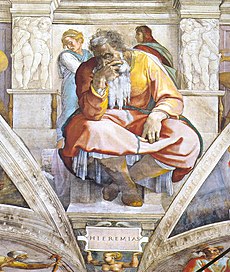
Пророк Иеремия, Микеланжело Буонаротти.jpg
Jeremiah, by Michelangelo
from the Sistine Chapel
JEREMIAH 26:8-15

THE LORD SEEKS YOUR REPENTANCE.

In the name + of Jesus.

     Lent is a penitential season in which we take stock of our lives and ourselves, to be aware of our sins—especially of those pet sins we are accustomed to doing—and to root them out of our lives.  The point of Lent is not to make ourselves feel bad.  The Lord does not want us to self-flagellate or to punish ourselves.  God is not a Sadist.  But our Lord Jesus Christ did proclaim, “Repent, for the kingdom of heaven is at hand.” (Matthew 4:17)  Repentance is not mere sorrow over our sins.  It is turning away from them because we recognize that they are evil and opposed to God and his will.  And though being aware of your sins will make you feel bad, God uses that remorse for a godly purpose.  It is to drive you all the more fervently to Jesus for forgiveness and consolation.  And that, finally, is the point of the Lenten season.  It is about pointing people to Jesus who has made himself the atoning sacrifice to free you from your sins, to make you into a new creation, and to set you apart for good works and not for sins.  The Lord seeks your repentance.
     The Lord had sent the prophet Jeremiah to preach repentance to the people of Israel.  He did not send Jeremiah to the rougher neighborhoods of Jerusalem to confront the riff-raff.  He sent Jeremiah to church.  Jeremiah entered the temple to preach to the church-goers and to the clergy.  It was not enough that the people went through their rituals.  Their hearts were not conforming to God’s word, and their lives were not demonstrating God’s love. The Lord is not pleased when we merely play church or when our faith remains merely a mental exercise.  What you believe in your heart finally comes out of your mouth and your body—whether good or bad.  And things in Jerusalem were not good.
     The Lord sought their repentance rather than their destruction, so the Lord sent Jeremiah to preach.  In the past, the Lord demonstrated his judgment against Israel by destroying the tabernacle at Shiloh.  The Lord did not care about the structure in which the sacrifices were made, not if the people were persisting in their sins.  For the same reasons, the Lord would not spare their temple.  Jeremiah warned that judgment would come in violence and bloodshed and travesty if they did not mend their ways and their deeds.  It was not because God is a Sadist.  It is because the Lord seeks repentance.
     If you notice who sent Jeremiah and who Jeremiah spoke for, you will see it is the LORD.  That is spelled in all capital letters in your English translation.  When LORD is in all caps, it is the special name by which God revealed himself to Israel.  This is Jehovah, or more likely pronounced, “Yahweh.”  Yahweh is the God who acts to deliver his people.  He is the God who appeared to Moses in the burning bush to send him back to Egypt to deliver Israel from bondage.  He is the God who parted the Red Sea so that Israel could cross on dry ground and so that their enemies would be drowned in those waters.  He is the God who provided for Israel in the wilderness and then brought them into the Promised Land.  This Yahweh sent Jeremiah to call the people of Israel to repent of their sins.  The Lord was not interested in destroying his people, but saving them.
     The Lord seeks your repentance too.  Your Yahweh calls you to assess yourself, even if you have been a church-goer your whole life.  There is a tremendous blessing in being a life-long Christian.  You have known your whole life that you are a child of God and, therefore, an heir of eternal life.  But if there is a danger in being a life-long Christian, it is that you may think lightly of your sins.  After all, you know the rest of the story.  You know that, after I call you to repent of your sins, I am also going to proclaim that Jesus Christ has paid the price for all your sins so that you are forgiven.  And this sermon will be no different.  But that also may lead you to think that your sins are no big deal.  After all, if your sins are forgiven, why should you be bothered by them, right?
     Dear children of God, there is no place in all of the Bible where the Lord tells you that sins are no big deal.  Sins are rebellion against God and against his word.  God never regards that as no big deal.  Sins damn, without exception.  To get comfortable with your sins is to play with hellfire.  To dismiss them is to fail to recognize how deadly they are.  And if you let sins become habit, they will make themselves at home with you.  And if sin is at home with you, then you will grieve the Holy Spirit and cause him to depart.  Your Yahweh does not seek to desert you or to destroy you; the Lord seeks your repentance.  Therefore, repent.
     The prophet Jeremiah spoke to the church-goers and clergy in Jerusalem: “The Lord sent me to prophesy against this house and this city all the words you have heard.  Now therefore mend your ways and your deeds, and obey the voice of the Lord your God, and the Lord will relent of the disaster that he has pronounced against you.” (Jeremiah 6:12-13)  The prophet calls you to make your ways right, that is, to put away every wicked thought, word, and act, and to conform your life to God’s Commandments.  We do not do this because our good works save us, but because good works are God’s will.
     The Lord does not delight in inflicting pain or punishing you for your sins, and he does not reject you because you are not perfect.  The Lord is your Yahweh.  He is the God who delivers you from all your sins.  Jesus Christ has shed his innocent blood for our sins.  God has been pleased not to afflict us with violent judgment and an accursed death—even though that is what our sins deserve.  Instead, Jesus was afflicted with violent judgment, an unjust sentence, and an accursed death.  He willingly accepted our judgment and bore our accursed death so that we would find forgiveness for our sins.  Sins damn, without exception.  Every sin is a big deal; for every sin is rebellion.  But Jesus was damned for us for all our sins.  Jesus’ death on the cross was a big deal because that is where the Lord took care of all our sins.
     The Lord seeks our repentance, but even when we commit ourselves to doing better, we recognize that we still do not do the good we want to do.  And even the good we do is often done begrudgingly.  Husbands run the errands with a groan.  Mothers fix meals for their children when they would rather be reading a book.  You do your job with a smile pasted on your face because you despise the customers you are waiting on.  In other words, we prove that we are sinners.  But the Lord does not inflict punishment upon us for our sins.  Our Yahweh is not eager to smite us.  In fact, despite our own sinfulness, the Lord still blesses us and manages to provide blessings through our imperfect actions.  The errands still get done, the meals nourish the children, and the customer gets served.  But it is not because we are good.  It is because the Lord Jesus Christ renders our service good.  He purifies what is imperfect in us and declares it good.
     Jesus set you free from all your sins so that they will never condemn you and so that they will no longer own you or control you.  One who is freed from a death sentence does not make efforts to go back to doing what brought death upon him.  Therefore, since we have been set free from our sins, we repent of them and flee from them.  Lent is not about feeling bad; it is about Jesus who produces in us the joy of knowing that we are forgiven of our sins.  It is about Jesus who sets us apart from death and destruction and who sets us apart for good works.  It is about the God who remains our Yahweh—the God who delivers us from sin, from death, and from hellfire.
     For, the Lord is not a Sadist.  He does not delight in inflicting pain, in destroying people, or even in the death of the wicked.  The Lord seeks your repentance, and your Yahweh provides your deliverance and forgiveness.  That is who he is, and that is what he does.

In the name of the Father and of the Son + and of the Holy Spirit.  Amen.