MARK 8:31-38
YOU CANNOT HAVE CHRISTIANITY WITHOUT THE CROSS.
In
the name + of Jesus.
Every year, people make New Year’s resolutions. Either you resolve to address an area of your
life where you could do better, or you resolve to improve yourself by doing
something new. If a New Year’s
resolution is an admission that you need to do better, Lent is a season which admits
that you are broken. It is a season of
repentance. If your focus is on
repentance, the focus must also be on your sins—the thoughts, words, and actions
you need to be repentant of and to root out.
The Bible has often tied repentance with fasting. Fasting is done as an expression of
grief. If you have ever grieved over
some difficult experience, you probably did not feel like eating. Your nerves were frazzled. Your stomach was in knots. Your heart was broken. You were told to eat something because you
needed to, not because you wanted to. This
is why fasting has been tied to Lent. We
are grieved over our sins. With fasting,
repentance ends up being more than a mental exercise. We engage our bodies in it so that our bodies
and souls both grieve over our sins.
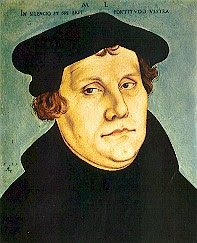
In Luther’s Small Catechism, we memorize these words: “Fasting and other
outward preparations may serve a good purpose.”
If fasting—or the more generic “giving up something for Lent”—enables you
to focus on your need for Jesus, then it serves a good purpose. But if it is something you do just to boast that
you went 40 days without chocolate, then it is useless. Giving up something for Lent is supposed to
be a discipline that curbs your flesh, fights against the sins you struggle
with, and highlights your need for Jesus. That is the only thing that makes any ceremony
any good.
This is what the Lord says, “If
anyone would come after me, let him deny himself and take up his
cross and follow me.” (Mark 8:34) You cannot have Christianity without a cross. It isn’t optional. When Jesus tells you to deny yourself, it is
an imperative. An imperative is not a
suggestion; it is a command. But “Let
him deny himself,” is far more than denying yourself chocolate or soft drinks
during Lent. It is denying your very
self.
We all have a
sinful nature that desires what exalts us.
We want praise, acceptance, ease, and luxury. We want the closest parking space, the first place
in line, the biggest portion of dessert, and the most important job title. We don’t want these things because we can benefit
others with them; we want them for our own benefit. The sinful nature loves itself above all things. It corrupts us and co-opts our attitude. Since we appear to benefit from granting our
sinful nature what it wants, we do not want to give it up. But this is what the Lord says: “Whoever
would save his life will lose it… For
what does it profit a man to gain the whole world and forfeit his soul?” (Mark
8:35-36)
If you do not take Jesus’ words seriously here, it is only because you
don’t think you can really gain the whole world. Not even Bill Gates or Warren Buffet can have
that much. But the reality is you can
gain the whole world. How? By going along with the world in all its
corrupted attitudes. Today, people are
goaded into denying God’s word and celebrating perversion. You can be rewarded by being “on the right
side of history,” or you can be cancelled for refusing to comply. You can be erased from social media for
saying the wrong thing. You can lose
your job for simply stating what the Scriptures teach about God’s created order
or what the Commandments decree about right and wrong. Increasingly, it seems that there will be a cost
for standing on God’s word. If your highest
good is to save your life in this world, to enjoy the opportunities it offers,
to be compensated and celebrated in this world, it is easy to do: Learn to
confess the world’s creeds. But by doing
so, you will have to profess your shame in God’s word. You will gain the world and everything in it,
but the cost will be to forfeit your soul.
And the Lord Jesus will be ashamed of you when he comes to judge the living
and the dead.
Even if you don’t adopt the world’s creeds and causes, you still will
battle with yourself. This is why Jesus
tells you to take up your cross. It is
only when the Lord puts a cross on you that you recognize how much of a sinner
you still are. What is the cross
for? It is for killing people. And your sinful nature does not want to die. It does not want to lose praise, pride, pleasure,
or possessions. We would rather avoid
the cross or to cast it off. But you
cannot have Christianity without the cross.
“If anyone would come after
me, let him deny himself and take up his cross and follow me.” (Mark
8:34)
A life of repentance is not optional.
And to make you see what you need to repent of, Jesus tells you to deny
yourself. This means to put others first. You put the needs of your wife above yours. You help your neighbor carry his burdens. You seek the good of your co-workers even
when they are rude, obnoxious, or spiteful.
And when you recoil at this and consider it nonsense, Jesus has you ponder:
“If you love those who love you, what reward
do you have? Do not even the tax
collectors do the same? And if you greet
only your brothers, what more are you doing than others? Do not even the Gentiles do the same?” (Matthew
5:46-47) “Love your enemies
and pray for those who persecute you, so that you may be sons of your
Father who is in heaven. For he makes
his sun rise on the evil and on the good, and sends rain on the just and
on the unjust.” (Matthew 5:44-45)
If we are to be children of the heavenly Father, we are to be like
him. But we are not. Our heavenly Father’s love is pure. He does not play favorites. We do not love as we ought. We do play favorites, and we give our love as
a reward rather than for free. So, rather
than defend ourselves, let us deny ourselves.
We have nothing to boast about or be proud of. We take up our cross and crucify the sinful
nature which wants only to save its pampered, self-centered life in this world. For, repentance is not a theoretical
exercise; it is put into practice. Repentance
does not merely admit that sins are bad; it engages in the discipline to
renounce them and to crucify them. You
cannot have Christianity without the cross.
Of course, it is not your cross
that saves you. It shows that you need
to be saved. It puts to death the sin which
is in you so that it will not ensnare you.
But you are not saved by how well you deny yourself, by what you give
up, by what you suffer, or by how repentant you can make yourself feel. That would mean your salvation is up to
you. It is not. It is up to Jesus. And even for Jesus, there is no Christianity
without a cross.
That is what Jesus told the apostles: “He began to teach them that the Son of Man
must suffer many things and be rejected by the elders and the chief
priests and the scribes and be killed, and after three days rise again. And he said this plainly.” (Mark 8:31-32) This
is what Jesus must do. It was necessary. It was not optional. And it certainly was not easy. Jesus did not get to choose how he would save
you. This is what was foretold and proclaimed
throughout the Scriptures. Yes, Jesus
would crush the head of the serpent, but the serpent would strike his heal. Yes, there would be atonement made for
sinners, but atonement means a sacrifice.
Blood would have to be shed on behalf of those who would be
pardoned. Redemption would be won, but
to redeem someone, there has to be a payment made. What payment could deliver the entire world
from death? The life of God the Son. The Son of Man must suffer many things, be
rejected, and be killed to do this. If
he does not, there is no atonement, no pardon, no resurrection, no hope. You cannot have Christianity without a cross.
It was perfect
love which drove Jesus to that cross. He
had to suffer many things. He suffered
from people who sinned against him. He
had to endure lies and slander. He was
subjected to entrapment by public challenges to his teachings and to intrigue
by secret meetings to kill him. He had
to endure disciples who boasted of their importance and who failed to understand
the kingdom of God is about grace, not greatness. He was betrayed and denied by friends; he was
falsely accused and unjustly condemned by enemies. In all of this, he still loved those for whom
he was sent and for whom he was slain.
He was crucified for those who sinned against him, even for those who fail
him, who are ashamed of him, and who curse him.
No matter what
your sins are, he died to atone for you.
His love is pure, and he did not play favorites. Jesus had asked, “What does it profit a man to gain the
whole world and forfeit his soul?” (Mark 8:36) In contrast, Jesus gave
up his soul into death to gain the whole world. He is the Lamb of
God who was slain so that every soul could have life eternally. If anyone perishes, it is not because Jesus
Christ was stingy with his grace. People
may reject and deny Jesus, but Jesus will never deny who he is—the Son of God
in the flesh who has suffered and died for mankind. Salvation may be forfeited by men, but it
will never with withdrawn by the Son of Man.
That faithful love that was poured out at the cross was poured upon you
in your baptism and is poured into you from this altar to save you.
You cannot have
Christianity without the cross. The
cross is where your sins are paid for, and the resurrection is proof that the
payment is sufficient. The resurrection
is the proof that there is new life for all who believe in Jesus. Jesus has snatched you away from your sins to
give you this new life. He calls you to
deny yourself and to take up your cross so that you are not snatched back by
your sins. He calls you to follow him,
to cling to him, and to trust in him for your salvation.
Fasting and
other outward ceremonies may serve a good purpose. They provide a discipline against your flesh
and highlight your need for Jesus. Bearing
the cross that Jesus puts on you is good; for it puts to death the sin which is
in you and it drives you to Jesus. Jesus’
death on the cross is your highest good; for that is where he has atoned for
you. This is the focus of our
faith. It has to be. For you cannot have Christianity without the
cross.
In the name of the Father and of the Son +
and of the Holy Spirit. Amen.